In high-wear industrial settings such as thermal power generation, metallurgy, cement production, and mining, the choice of equipment linings directly impacts production continuity and operational costs. Shandong Qishuai Wear-Resistant Equipment Co., Ltd. has been deeply involved in the wear-resistant protection sector for many years and has found that the core challenge in the industry has never been “whether to use linings,” but rather “which type of lining is best suited to the operating conditions.” While metal linings have a long history of application, ceramic linings have gradually gained widespread adoption due to their material properties. Neither is inherently superior; the key lies in matching the lining to the specific type of wear encountered on-site.
The wear mechanisms present in operating conditions are the key factor in selecting lining materials. They are primarily divided into three categories:
High-speed fine-particle erosion: Primarily abrasive wear, commonly found in pneumatic ash conveyance and powder conveying pipelines;
Large-particle impact: Primarily impact wear, commonly found in crusher discharge chutes, silo chutes, buckets, etc.;
Mixed wear: A combination of erosion and impact, representing the actual operating conditions in most industrial systems. Identifying the dominant wear type allows for the preliminary selection of a suitable lining solution.
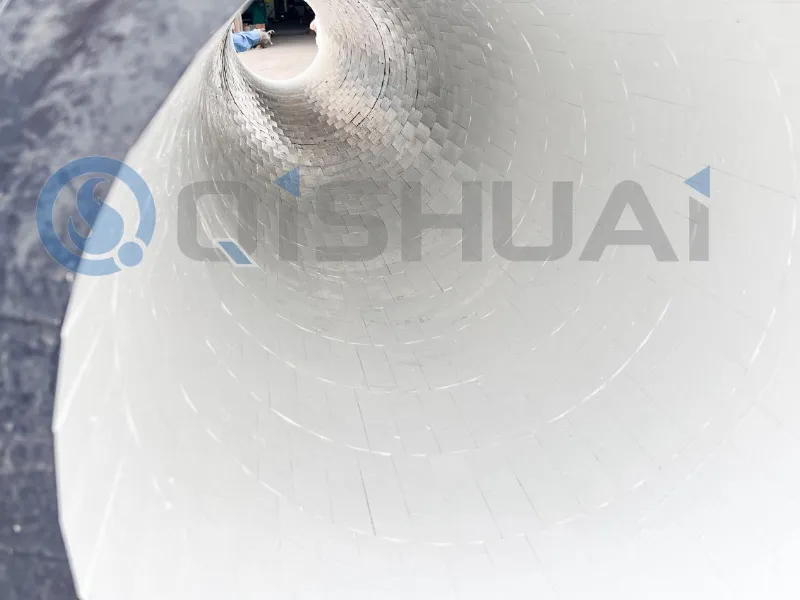
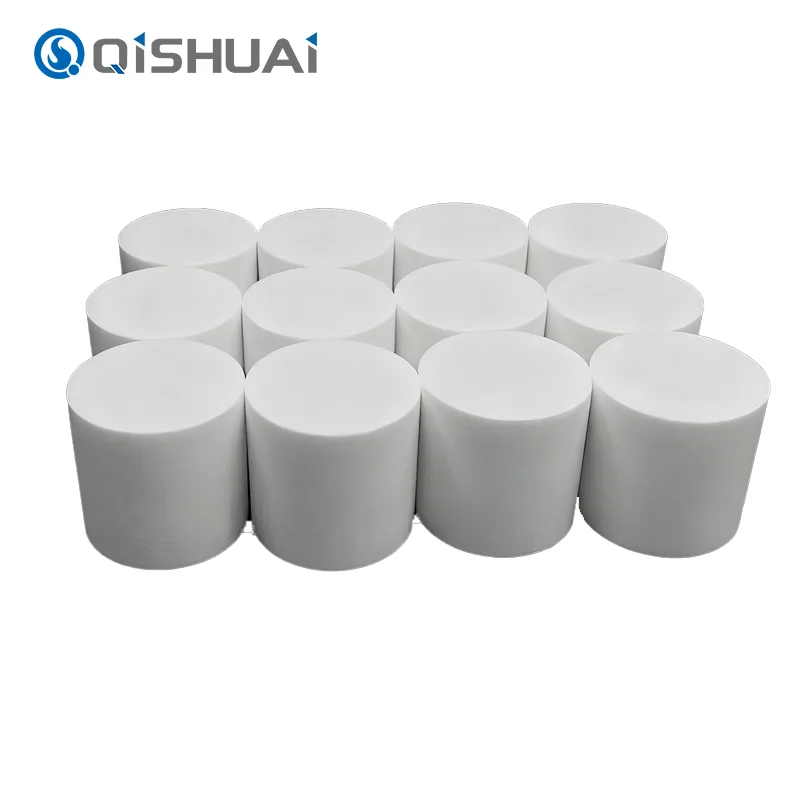
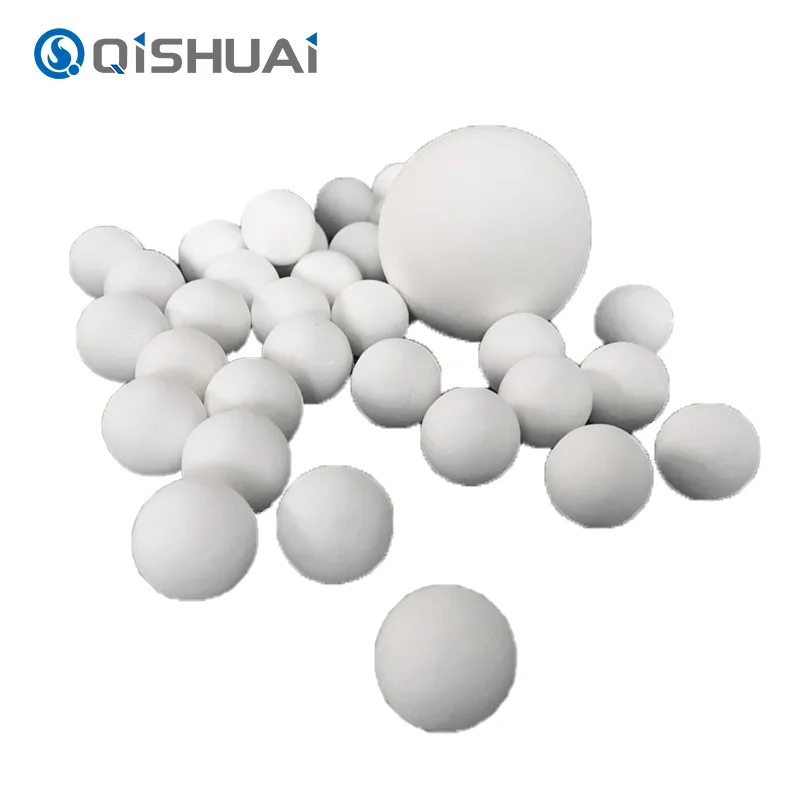
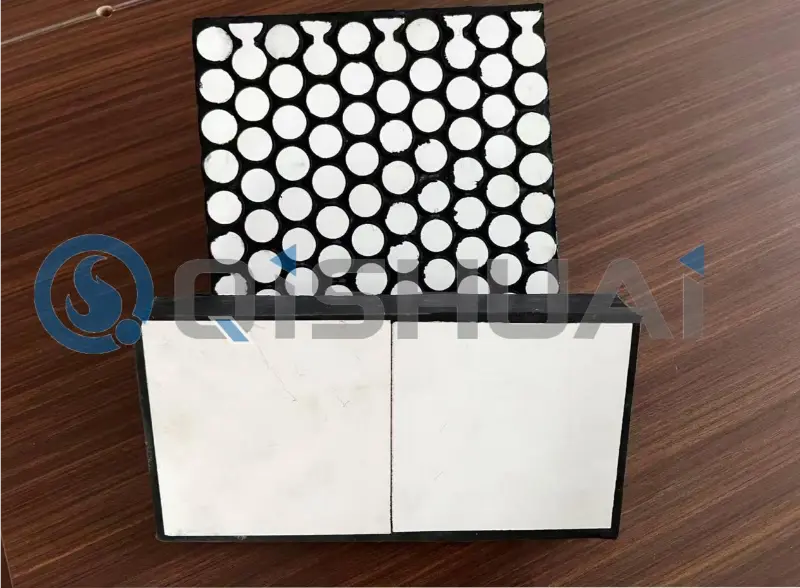
The core advantage of Qishuai Wear-Resistant’s Alumina Ceramic Wear Liners in its high hardness, with a Rockwell hardness of HRA 85 or higher, ensuring stable performance under abrasive wear conditions.
Fine/medium-particle conveying: such as ash conveyance pipelines in power plants, raw material chutes in cement plants, and pulverized coal conveying systems;
Continuous, stable flow conditions: pipelines and silo inner walls where material flow rates are uniform and impact forces are low;
Low long-term maintenance requirements: scenarios where equipment must operate continuously and frequent shutdowns for maintenance are costly.
Ceramic linings offer excellent resistance to sliding and abrasive wear, maintain a stable surface condition during long-term operation, and exhibit significantly lower thickness loss compared to metal linings. Taking fly ash conveyance pipelines as an example, the service life of Qishuai ceramic-lined elbows can be several times longer than that of standard steel-lined elbows, significantly reducing replacement frequency and downtime.
Metal Lining: Tough and Impact-Resistant, Suitable for Heavy-Duty Impact Applications
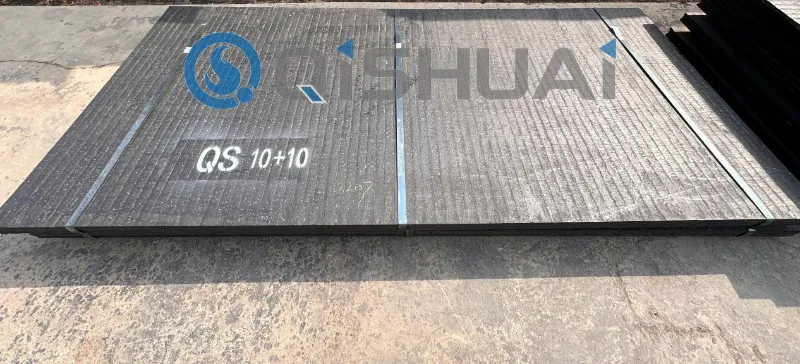
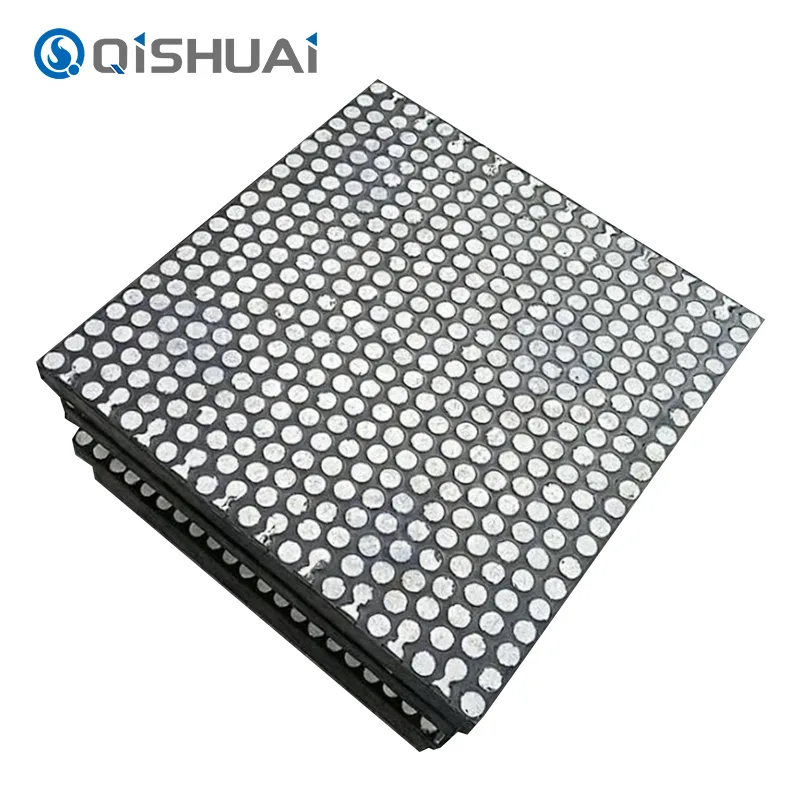
The core advantage of metal linings (including hardened steel and alloy overlay plates) is their high toughness. The Chromium Carbide Overlay Wear Plates manufactured by Qishuai Wear-Resistant using an overlay welding process combine the toughness of the base material with the hardness of the wear-resistant layer, resulting in outstanding impact resistance.
Impact from large-sized materials: mining ore chutes, crushing areas, and discharge openings with high drop heights;
Unstable load conditions: equipment handling materials of varying particle sizes, subject to frequent start-stop cycles, or experiencing high-angle impacts, such as buckets and the side panels of vibrating screens;
Emergency repair scenarios: components requiring rapid on-site cutting and welding repairs, where metal lining installation is more convenient.
Although metal linings wear at a faster rate than ceramic linings, they fail gradually and are less prone to sudden fracture. In hoppers subjected to the impact of large ore chunks, Qishuai’s chromium carbide overlay liners can withstand repeated impacts, avoiding the cracking and spalling issues common with ceramic linings and ensuring stable equipment operation.
Key Trade-off: Balancing Hardness and Toughness
The choice between ceramic and metal linings essentially comes down to a trade-off between hardness and toughness:
Ceramic linings: High hardness, relatively low toughness; excellent wear resistance, poor impact resistance;
Metal linings: Moderate hardness, high toughness; excellent impact resistance, relatively poor wear resistance. In short:
Choose ceramics for applications where abrasion is the primary concern, and metals for those where impact is the primary concern. Neglecting this balance is a major cause of premature lining failure.
Cost Considerations: Short-Term Investment vs. Long-Term Benefits
From a cost perspective, metal linings have lower upfront procurement costs but wear out quickly and require frequent replacement, resulting in higher cumulative long-term operating and maintenance costs. Ceramic linings involve higher initial investment but offer a longer service life and extended maintenance intervals; in continuous production systems where downtime costs are high, they provide better long-term value for money. If the operating conditions are primarily characterized by impact damage, the costs associated with frequent cracking and replacement of ceramic linings may offset their wear resistance advantages; in such cases, metal linings are more economical.
Since a single-layer lining struggles to adapt to complex operating conditions, Qishuai Wear-Resistant, drawing on years of project experience, recommends a zoned composite design:
Impact Zone: Utilizes a chromium carbide metal-backed lining to withstand impacts from large chunks of material;
Erosion Zone: Utilizes an alumina ceramic lining to withstand high-speed wear caused by fine particles. This solution balances impact resistance and wear resistance, making it suitable for the mixed wear conditions found in most industrial systems. It reduces the risk of failure associated with single-material linings and extends the overall service life of the equipment.
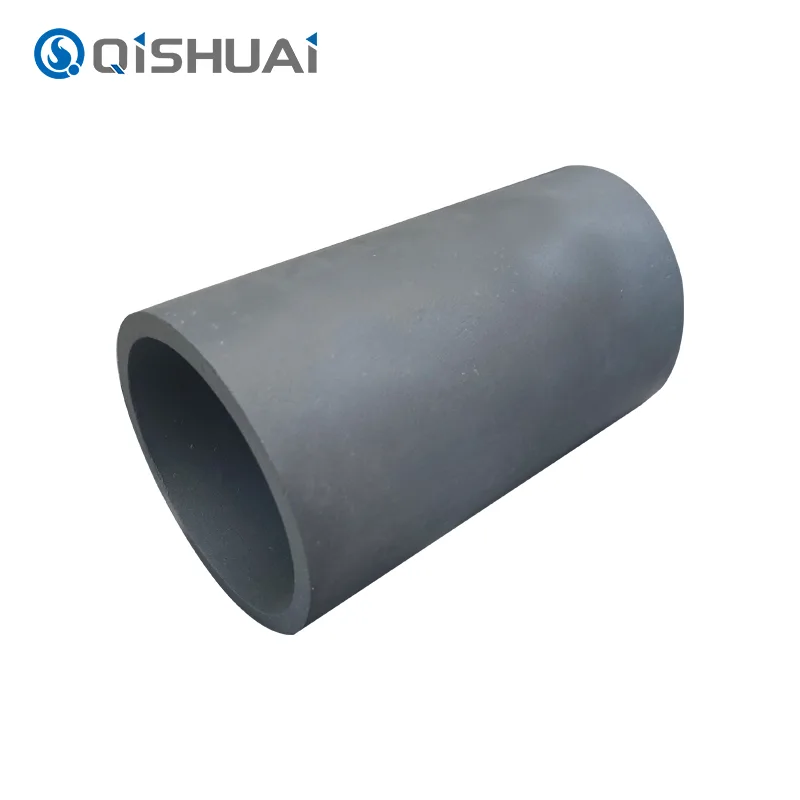
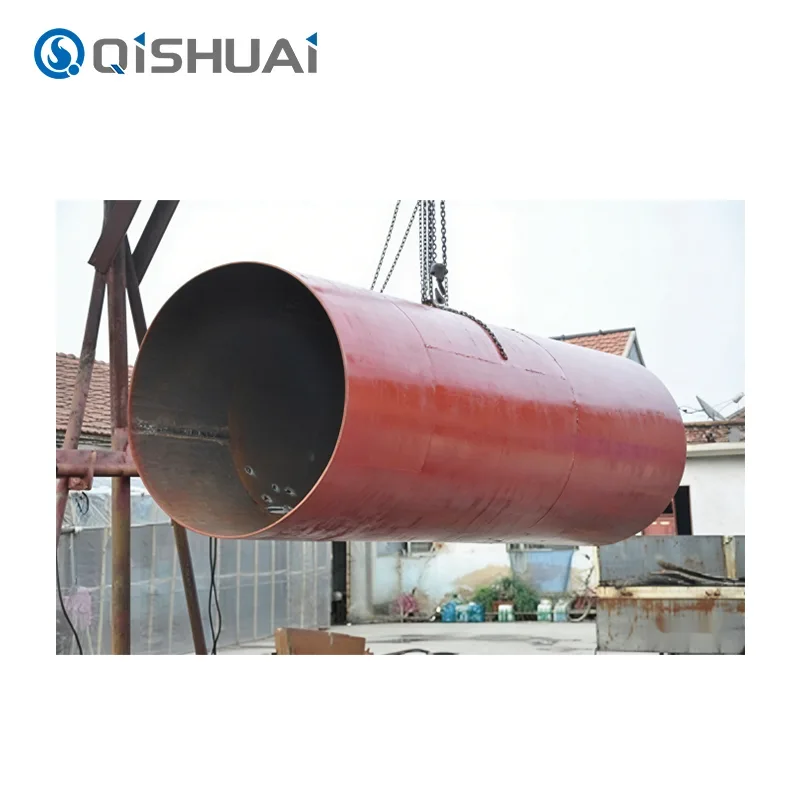
Ceramic linings and metal linings are not substitutes for one another, but rather complementary and compatible options. Shandong Qishuai Wear-Resistant Equipment Co., Ltd. consistently adheres to the principle of “prioritizing suitability for operating conditions.” Based on the specific wear characteristics of various industries—including thermal power generation, metallurgy, and mining—the company provides customized wear-resistant solutions such as Alumina Ceramic Wear Liner, Chromium Carbide Overlay Plate, and Composite Wear Pipe.
Email:qishuai@zbqishuai.cn