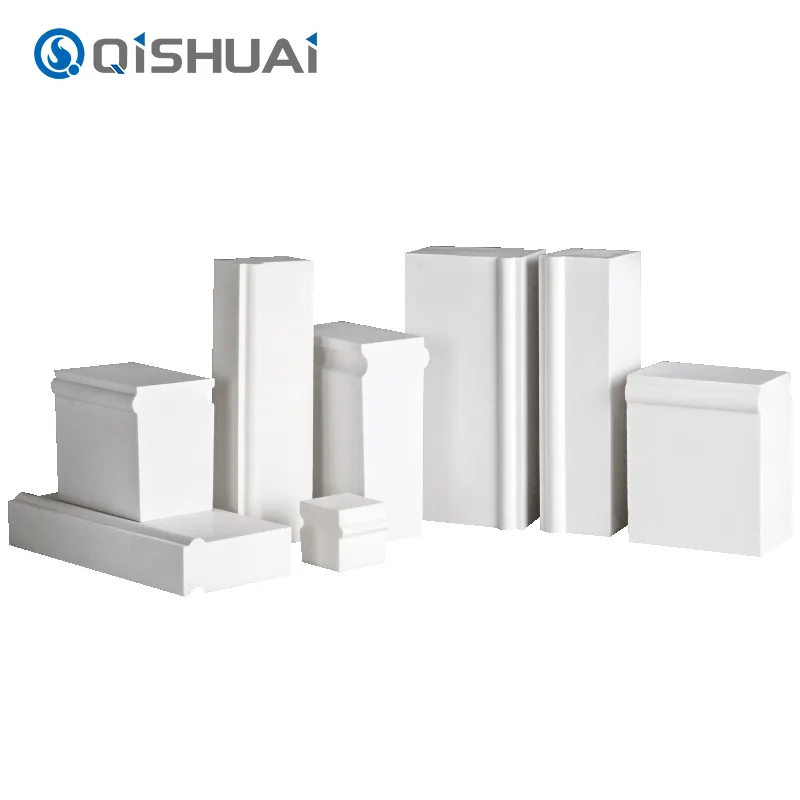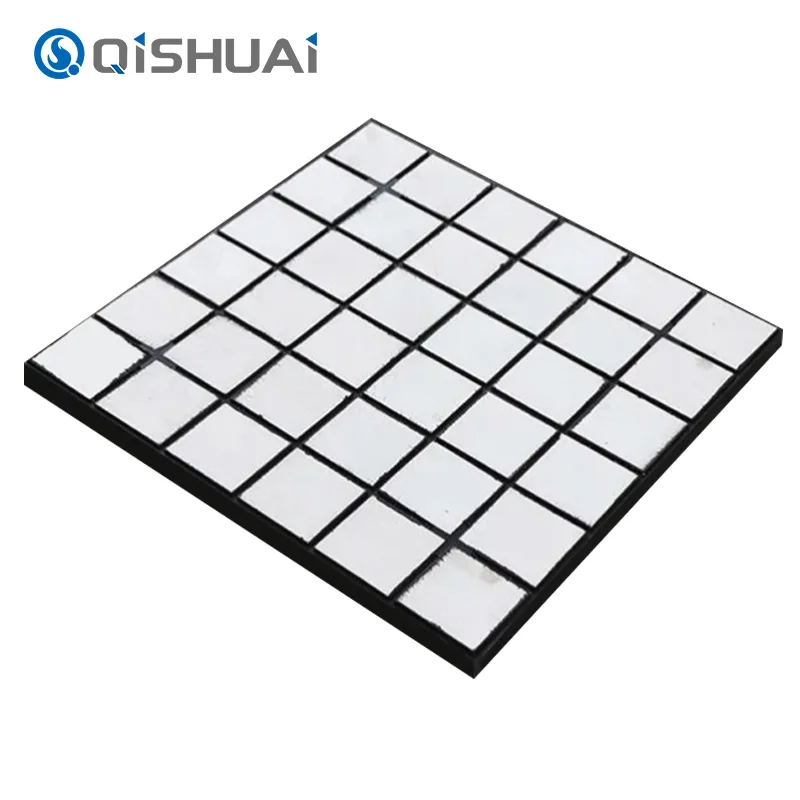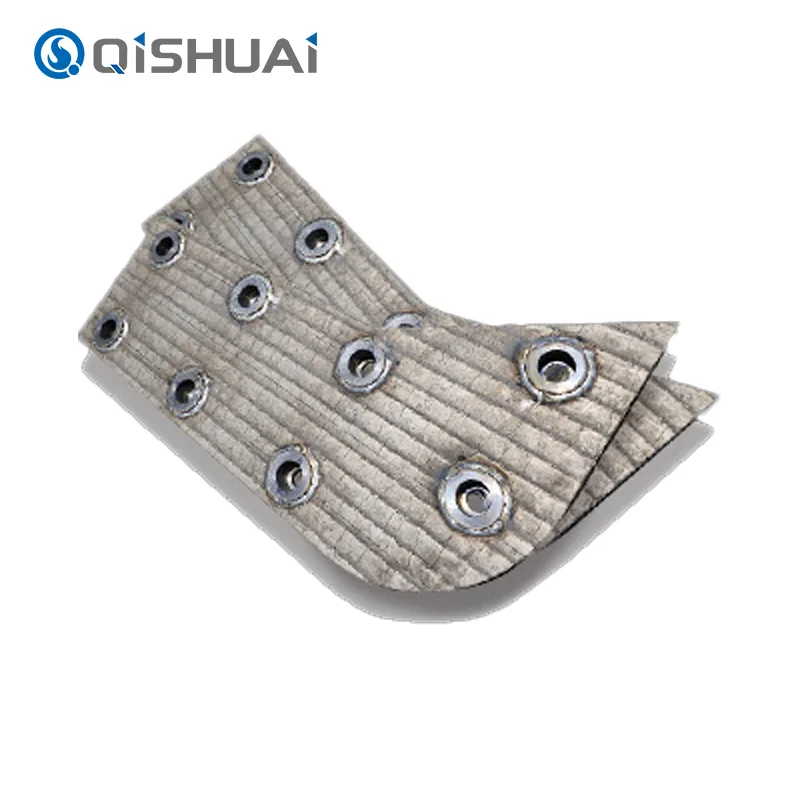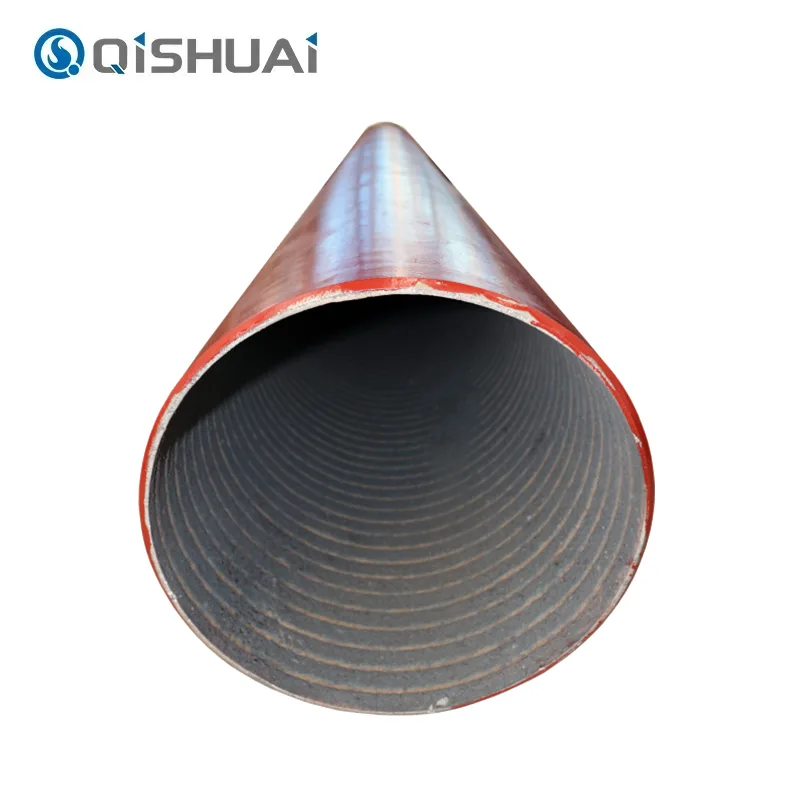
In high-wear industries such as metallurgy, coal mining, and cement production, equipment faces diverse wear challenges. Shandong Qishuai Wear-Resistant Equipment Co., Ltd. deeply understands that no "one-size-fits-all" wear-resistant plate can solve all problems. Therefore, we abandon complex model bundling and focus on working conditions as the core to provide you with precisely customized wear-resistant bimetallic composite surfacing plates. This ensures every plate is fully utilized to achieve the best cost performance.
We adopt advanced automatic surfacing technology to clad various high-performance wear-resistant alloys onto tough steel plate substrates, creating composite materials with "hard exterior and tough interior". Its core advantage lies in extremely high flexibility:
• Wear-resistant layer customizable on demand: From high-chromium cast iron to multi-component alloys, the hardness range (HRC 50-62+) and alloy composition can be adjusted according to your wear type.
• Substrate flexible selection: From ordinary low-carbon steel to high-strength plates and even heat-resistant steel plates, meeting different structural strength and operating temperature requirements.
• Easy processing and connection: Supports cutting, bending, welding (plug welding, bolt connection, etc.), with flexible installation methods to significantly reduce maintenance downtime.
Based on decades of industry service experience, we classify wear conditions into the following categories and provide corresponding material solutions:
1. Responding to Severe Abrasive Wear
Core parameter focus:
• Wear-resistant layer hardness: HRC 58-62 (higher hardness customizable)
• Key characteristics of wear-resistant layer: Rich in high-hardness carbides, with excellent abrasive wear resistance.
Typical application scenarios:
• Cement industry: Cooler hammers, clinker chutes, separator guide vanes.
• Coal/mining industry: Coal preparation screens, ore conveying chutes, mortar conveying pipe liners.
• Glass industry: Liners for raw material mixing and conveying systems.
Procurement and selection tips: Suitable for working conditions with fine material particles, small scouring angles, and mainly cutting wear. Focus on surface hardness and the microstructural density of the wear-resistant alloy.
2. Responding to High-Impact Composite Wear
Core parameter focus:
• Wear-resistant layer hardness: HRC 55-58 (balancing hardness and toughness)
• Key characteristics of wear-resistant layer: Optimized alloy system to improve fatigue resistance and spalling resistance.
Typical application scenarios:
• Metallurgy industry: Blast furnace bells, sinter machine bucket liners, material drop impact points.
• Building materials and brick-tile industry: Crusher cavity liners, double-roll mill roller surfaces.
• Power industry: Coal mill outlet necks, boiler slag pipes.
Procurement and selection tips: Suitable for parts where large materials (such as ore, clinker blocks) fall from heights with strong impact force. When selecting materials, both the impact toughness of the wear-resistant layer and the high strength of the substrate must be considered.
3. Responding to Wear in High-Temperature Environments
Core parameter focus:
• Characteristics of wear-resistant layer: Maintains high wear resistance at temperatures ≤600℃.
• Substrate and bonding layer: Heat-resistant steel plates are used to ensure overall strength at high temperatures.
Typical application scenarios:
• Metallurgical sintering: Sintering trolley side plates, single-roll crusher tooth crowns.
• Cement kiln system: Preheater inner cylinder hanging plates, tertiary air duct dampers.
• Power plant circulating fluidized bed boilers: Water wall tubes, cyclone separator target area wear protection.
Procurement and selection tips: At high temperatures, materials will soften and oxidize. Focus on the high-temperature hardness data and oxidation resistance of the wear-resistant layer provided by the supplier.
| Your Working Condition Pain Points | Core Dimensions of Qishuai Products | Recommended Performance Combination | Achievable Installation Methods |
| Severe material scouring and fast wear | 1. Wear-resistant layer hardness (HRC)2. Carbide type and distribution | 1. High-hardness alloy layer (HRC 60+)2. Dense and uniform wear-resistant structure | Cutting, welding, bolt fixing |
| Impact from large materials, easy deformation or cracking | 1. Wear-resistant layer toughness2. Substrate tensile strength3. Bonding strength between alloy layer and substrate | 1. High-toughness substrate 2. Strong and tough bonded wear-resistant layer | Welding, plug welding, bending (to be evaluated) |
| High operating temperature, easy failure of ordinary materials | 1. High-temperature stability of wear-resistant layer2. Substrate heat resistance grade | 1. Heat-resistant substrate 2. Special high-temperature wear-resistant alloy layer | Welding process formulated according to preheating temperature |
| Complex installation surface, requiring on-site flexible adaptation | 1. Plate processability2. Supplier's pre-processing capability | 1. Standard or customized size plates2. Providing pre-drilling and pre-bending services | Supporting on-site cutting, welding, and bolt connection |

Issue 1: "Our equipment has multiple types of wear simultaneously. How to choose?"
Our solution: This is our area of expertise. We can "tailor-make" wear-resistant plates for different parts of the same equipment. For example, adopt an impact toughness-optimized scheme at the material drop point and an ultra-high hardness scheme at the sliding area. One drawing, multiple performance matches, we provide integrated solutions.
Issue 2: "Worried that the plates will be difficult to install after purchase, delaying production?"
Our solution: We provide technical services beyond the products themselves. Before ordering, our engineers can assist you in determining the best connection method (welding or bolting). We can provide:
• Pre-processing services: Cutting, drilling, or even welding according to your drawings to deliver "ready-to-install" components.
• Detailed process documents: Attached with welding parameter guidelines and installation diagrams to ensure trouble-free construction for your team.
Issue 3: "How to verify if your products are really suitable for us?"
Our solution:
• Working condition diagnosis: Please provide key information such as material composition, particle size, temperature, and flow rate for free analysis.
• Sample testing: Small samples can be provided for on-site trial installation or simulation testing.
• Reference cases: We have accumulated hundreds of successful cases covering major industries and can provide references similar to your working conditions.
Issue 4: "Pursuing long-term cost performance but with limited budget?"
Our solution: The real cost lies in the total cost of ownership throughout the equipment's life cycle. Qishuai wear-resistant plates significantly extend the service life of spare parts (usually 3-10 times that of ordinary materials), reducing replacement frequency and downtime, thereby bringing you the lowest long-term operating costs. We are willing to calculate a "long-term account" with you.
We do not just sell wear-resistant products, but provide wear-resistant solutions based on working conditions. From accurate working condition analysis and scientific material recommendations to convenient processing support and installation guidance, we accompany you throughout to ensure you get the best user experience.
Contact us now, Email: qishuai@zbqishuai.cn!