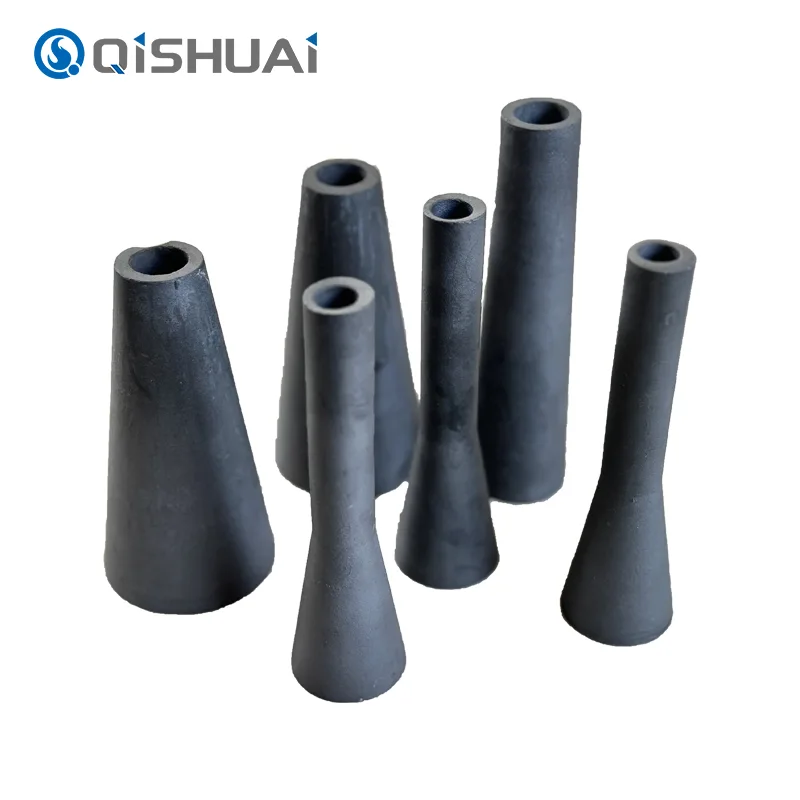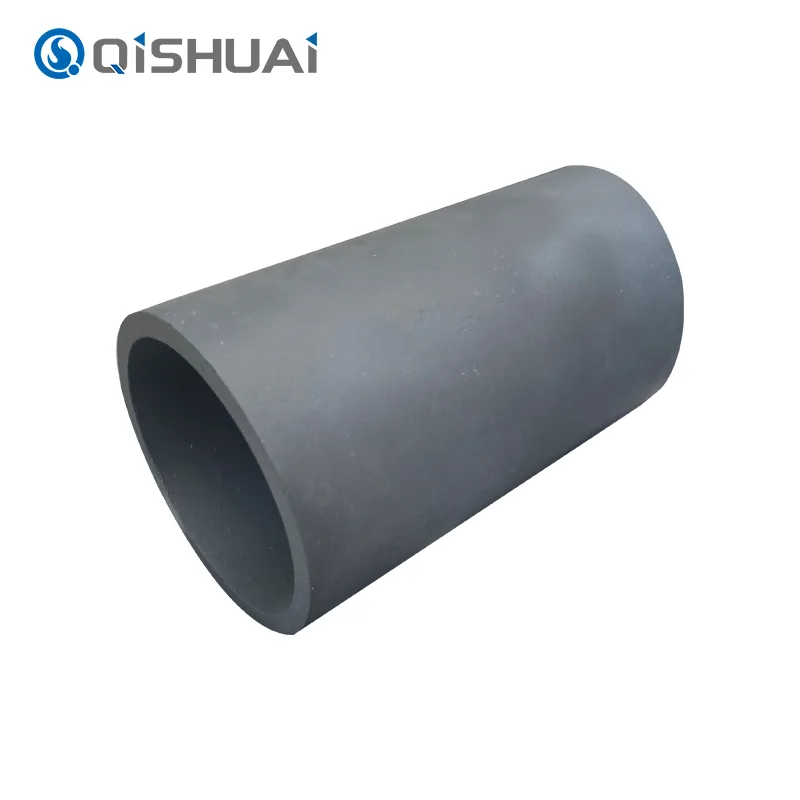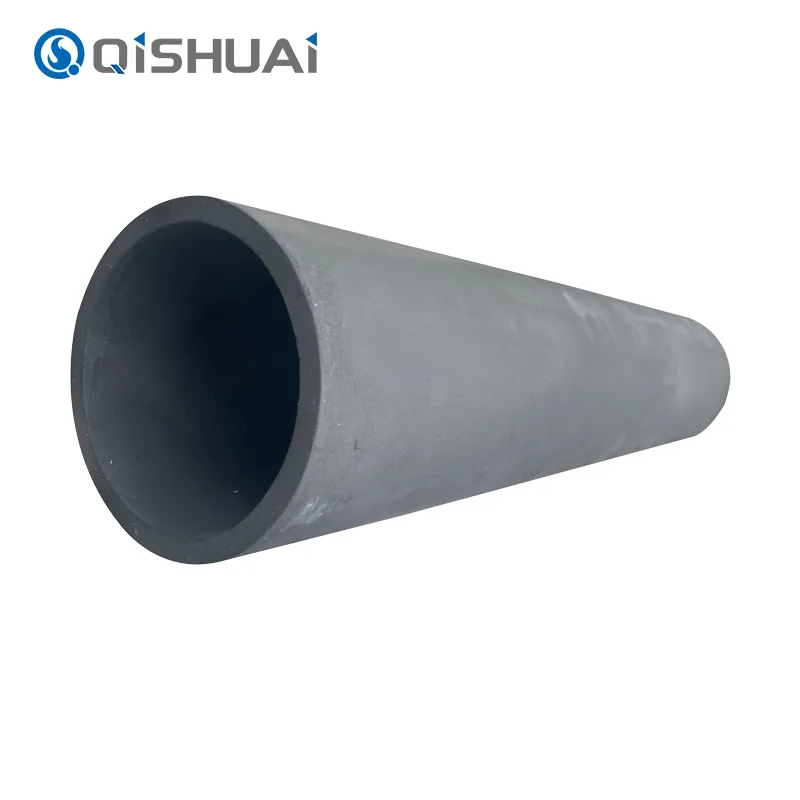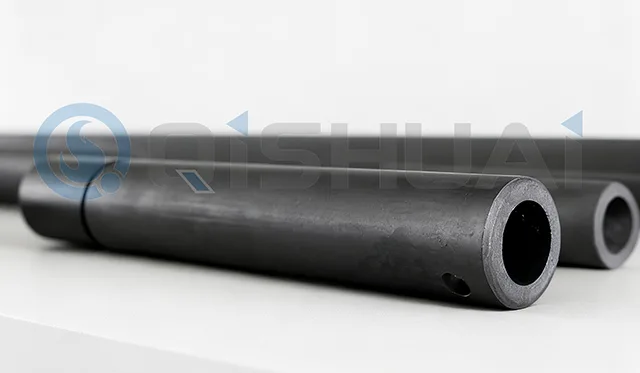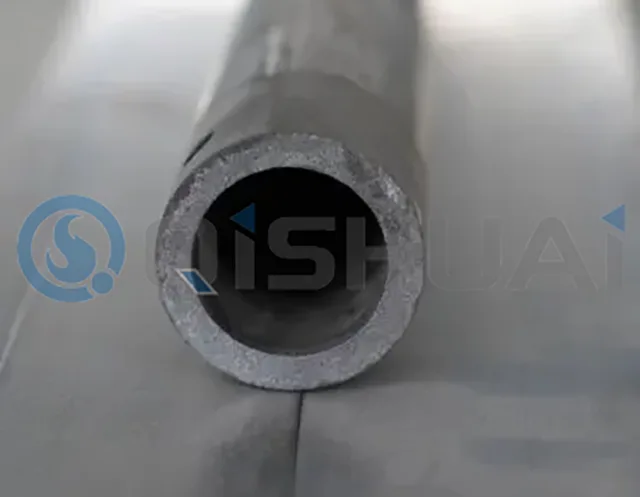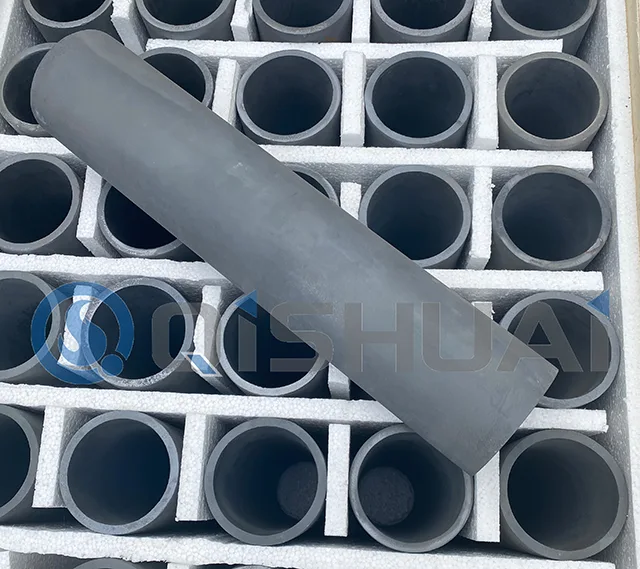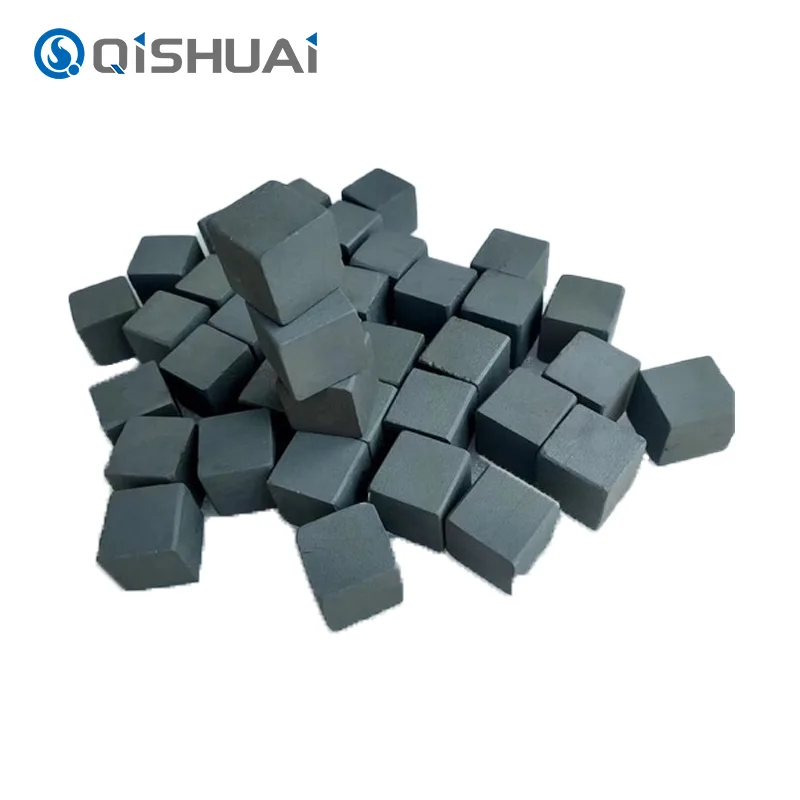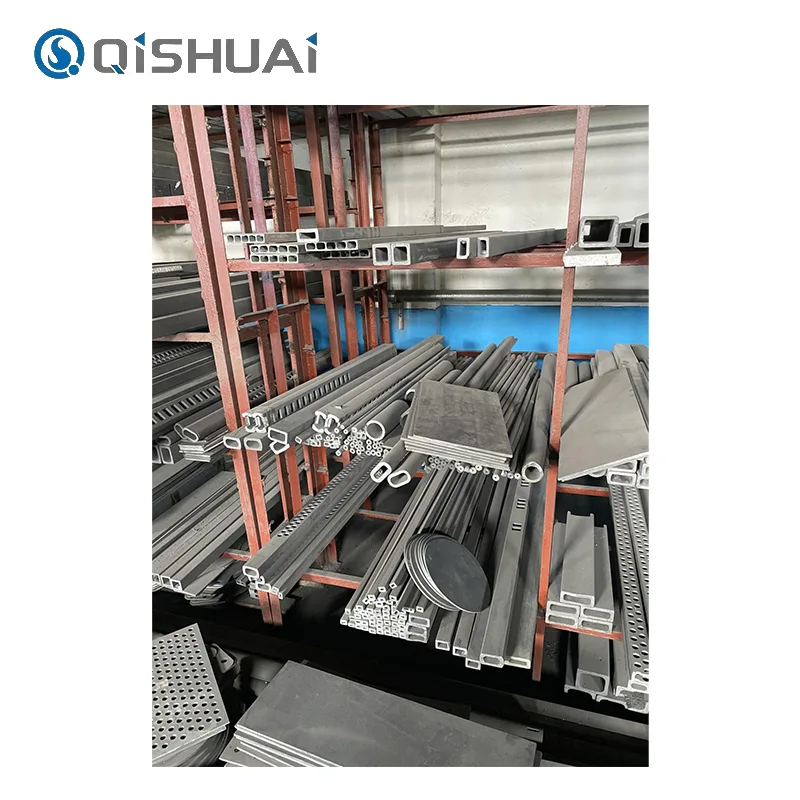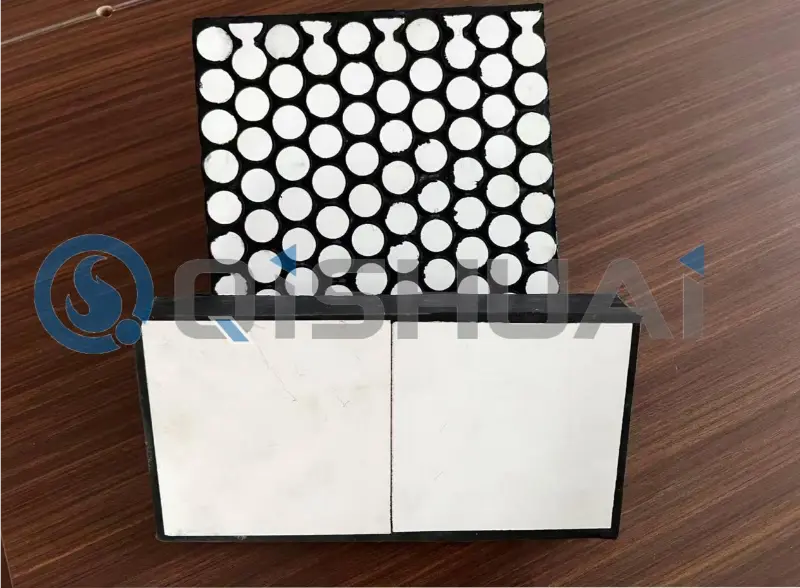
Shandong Qishuai Wear-Resistant Equipment Co., Ltd.'s silicon carbide tubes stand out across numerous sectors due to their exceptional performance. Primarily composed of silicon carbide, this unique material endows the tubes with a range of outstanding properties. Visually, silicon carbide pipes typically exhibit a black or deep grey appearance, featuring a smooth surface and a hard texture. Their structure is dense with uniformly thick walls. Available in multiple specifications and dimensions to suit diverse applications and requirements, common diameters range from several millimetres to tens of centimetres.
The structural design of this tubes is thoroughly tailored to meet practical application requirements. Its internally optimised flow channels ensure stable and efficient fluid movement within the tubing, minimising resistance and energy dissipation while significantly enhancing operational efficiency. Whether conveying high-temperature liquids or gases, or serving as reaction vessels in complex chemical processes, this tubes delivers reliable support for diverse industrial production processes through its exceptional structural properties.
To meet the diverse requirements of different customers across various application scenarios, we offer this tubes in multiple specifications. Below are their principal technical parameters and specification details:
|
Item |
Parameter range |
Specific details |
|
Pipe diameter(mm) |
10 - 500 |
Multiple pipe diameters are available to suit varying flow requirements and installation spaces. Smaller diameters (10–50 mm) are suitable for gas conveyance in precision instruments and compact chemical laboratory apparatus; Medium diameters (50–200 mm) are commonly employed for liquid or gas conveyance in general industrial equipment, such as chemical pipelines and cooling ducts for electrical installations; Larger diameters (200–500 mm) are primarily utilised in major industrial projects, including high-temperature gas exhaust ducts in metallurgical operations and material transfer pipelines for large-scale chemical reactors. |
|
Wall thickness(mm) |
2 - 20 |
Wall thickness design accounts for both the pipe's pressure resistance and the corrosive conditions of its application environment. Thinner walls (2–5 mm) are suitable for low-pressure, mildly corrosive settings; medium walls (5–10 mm) cater to most standard industrial applications; while thicker walls (10–20 mm) are employed in extreme conditions such as high pressure and severe corrosion, including high-pressure reaction pipelines in petrochemical plants and piping for deep-sea exploration equipment. |
|
Length(m) |
0.5 - 6 |
Lengths may be customised according to actual installation and operational requirements. Shorter lengths (0.5–1m) facilitate use within equipment with limited space, such as heat dissipation ducts for compact electronic devices; medium lengths (1–3m) represent the most common specification, widely employed across various industrial piping systems; longer lengths (3–6m) reduce the number of pipe connection points, enhancing system sealing integrity and stability, and are suitable for long-distance material conveyance pipelines in large-scale manufacturing facilities. |
|
density(g/cm³) |
≥3.15 |
thistubes possess a high density, reflecting the compactness of their material structure, which contributes to enhanced strength and wear resistance. |
|
Hardness (Mohs scale) |
≥9.2 |
The high hardness enables silicon carbide pipes to resist abrasion and scratching from external objects, maintaining excellent performance in environments where particulate matter is present. |
|
Flexural strength(MPa) |
400 - 600 |
Possesses high flexural strength, capable of withstanding external forces without deformation or fracture, ensuring stability under complex installation and usage conditions. |
|
Thermal conductivity(W/(m・K)) |
120 - 270 |
The excellent thermal conductivity ensures the high efficiency of silicon carbide tubes in heat transfer processes, meeting the demands of various heat exchange scenarios. |
|
Maximum operating temperature(℃) |
Over 2000 (short-term), 1600 (long-term stable operation) |
Outstanding high-temperature resistance enables reliable operation in demanding industrial environments, such as high-temperature furnaces and kilns within steel smelting and glass manufacturing industries. |
|
Corrosion resistance |
Chemically inert to a wide range of strong acids, alkalis and salt solutions, with an annual corrosion rate of <0.005mm. |
In highly corrosive environments, such as the conveyance of various corrosive materials within the chemical industry, it maintains stable chemical properties and extends equipment service life. |
High-temperature resistance:
This tubes exhibits exceptional high-temperature resistance, a key factor underpinning its widespread application across numerous high-temperature industrial scenarios. With a melting point reaching 2700°C, silicon carbide material enables the tubing to operate stably for extended periods at temperatures up to 1600°C, and even withstand brief exposures to ultra-high temperatures exceeding 2000°C.
This outstanding high-temperature resistance enables to play a vital role in industries such as steel smelting, glass manufacturing, and ceramic firing. Compared to traditional metallic tubing, this tubes demonstrate a significant advantage in high-temperature performance. Below is a comparative chart of high-temperature resistance data for several common tubing materials:
|
Pipe Type |
Maximum tolerable temperature (°C) |
Long-term operating temperature (°C) |
|
Silicon Carbide Tubes |
More than 2000 |
1600 |
|
stainless steel pipe |
800 - 900 |
600 - 700 |
|
carbon steel pipe |
600 - 700 |
400 - 500 |
The chart clearly demonstrates significantly outperforms other conventional pipe materials in terms of high-temperature resistance, meeting the demands of more stringent high-temperature working environments. Whether serving as heat exchangers within high-temperature industrial furnaces or functioning as conduits in high-temperature gas transmission systems, this tubes sensures stable equipment operation through its exceptional heat resistance. This reduces equipment replacement frequency, enhances production efficiency, and delivers substantial cost savings for enterprises.
Corrosion Resistance:
this tubes exhibits exceptional corrosion resistance, enabling stable operation within diverse highly corrosive environments. Whether exposed to concentrated sulphuric acid, aqua regia, hydrofluoric acid, or other potent acids; caustic soda, potassium hydroxide, or strong alkalis; or immersed in various salt solutions and organic solvents,this tubes maintains excellent chemical stability, exhibiting negligible chemical reaction with these media.
When handling 98% concentrated sulphuric acid, silicon carbide pipes can operate stably over extended periods, whereas conventional stainless steel pipes would suffer severe corrosion within a short timeframe, leading to pipeline leaks and equipment failure. The following table compares corrosion data for silicon carbide pipes and selected metallic materials in specific corrosive media:
|
Materials |
corrosive medium |
Annual corrosion rate(mm) |
|
Silicon Carbide Tubes |
98% concentrated sulphuric acid |
<0.005 |
|
316L stainless steel |
98% concentrated sulphuric acid |
1 - 2 |
|
Hastelloy |
98% concentrated sulphuric acid |
0.05 - 0.1 |
this tubes exhibit exceptional thermal conductivity, with thermal conductivity values ranging from 120 to 270 W/(m·K). This performance approaches that of low-carbon steel and significantly surpasses traditional ceramic materials such as alumina ceramics (which typically have thermal conductivities of 15 to 35 W/(m·K)). This characteristic enables this tubes to rapidly and efficiently dissipate heat during thermal transfer, substantially enhancing heat exchange efficiency.
The following table compares the thermal conductivity coefficients of several common materials:
|
Materials |
Thermal conductivity(W/(m・K)) |
|
Silicon Carbide Tubes |
120 - 270 |
|
Low-carbon steel |
40 - 60 |
|
alumina ceramics |
15 - 35 |
|
Ordinary glass |
0.7 - 1.0 |
The chart clearly demonstrates the significant thermal conductivity advantages of this tubes . In practical applications, these high-thermal-conductivity tubes not only enhance production efficiency but also effectively reduce energy consumption. This is because they facilitate substantial heat transfer across relatively small temperature differentials, thereby minimising the energy required to sustain heat exchange processes. This aligns with contemporary industrial trends towards energy conservation and emissions reduction. Whether within waste heat recovery systems for high-temperature industrial furnaces or in thermal management assemblies for electronic equipment, the superior thermal conductivity of sthis tubes plays a vital role, providing robust support for industrial production and technological advancement.
Silicon carbide pipes exhibit high strength and exceptional wear resistance, owing to their unique crystalline structure and material properties. With a Mohs hardness of 9.2, second only to diamond, and a flexural strength ranging from 400 to 600 MPa, silicon carbide pipes can withstand significant external forces without deformation or fracture.
The following chart presents comparative data on the strength and wear resistance of silicon carbide pipes versus other common pipe materials:
|
Pipe Type
|
Mohs hardness
|
Flexural strength (MPa)
|
Abrasion resistance (relative multiple, with steel pipe as 1)
|
|
Silicon Carbide Tubes |
9.2 |
400 - 600 |
3 - 5 |
|
Steel pipe |
4 - 5 |
200 - 300 |
1 |
|
Cast iron pipe |
4 - 4.5 |
100 - a200 |
0.5 - 1 |
The chart clearly demonstrates the significant advantages of silicon carbide pipes in terms of strength and wear resistance. This high strength and wear resistance enables silicon carbide pipes to operate reliably in various harsh industrial environments, reducing the frequency of equipment maintenance and replacement, lowering operational costs for enterprises, and enhancing production continuity and stability.
Shandong Qishuai Wear-Resistant Equipment Co., Ltd. employs an advanced and well-established production process for this tubes. Every stage strictly adheres to international standards, ensuring the high quality and consistency of our products.
In selecting raw materials, we meticulously choose high-purity silicon carbide powder characterised by uniform particle size and low impurity content. This forms a robust foundation for the superior performance of our silicon carbide tubes. Through rigorous supplier screening and raw material inspection protocols, we control product quality from the source, ensuring every batch of materials meets our exacting standards.
During production, we employ advanced isostatic pressing technology to uniformly compact the silicon carbide powder into tube blanks under high pressure. This forming process achieves uniform density and a dense structure within the blanks, significantly enhancing the strength and stability of the finished tubes.
Subsequently, the tube blanks undergo high-temperature sintering. Our sintering furnaces feature advanced temperature control systems, enabling precise regulation of sintering temperatures and heating rates. During this high-temperature process, particles within the silicon carbide tube blanks fuse together, forming a more compact crystalline structure that further enhances the tubes' hardness, wear resistance, and high-temperature performance. Post-sintering,this tubes achieve industry-leading performance metrics across all key indicators.
To ensure every silicon carbide tube meets quality standards, we have established a comprehensive quality inspection system. Multiple quality control points are positioned along the production line, enabling real-time monitoring of critical parameters including appearance, dimensions, density, hardness, and pressure resistance.The following are key quality inspection standards for the production process of this tubes::
|
Testing items |
Standard requirements |
|
Appearance |
Surface smooth, free from visible cracks, pores, pinholes or other defects |
|
Dimensional deviation |
The diameter deviation is controlled within ±0.5mm, and the length deviation is controlled within ±5mm. |
|
density |
Not less than 98% of the theoretical density |
|
Hardness |
Mohs hardness not less than 9.0 |
|
Compressive strength |
Under the specified test pressure, maintain for 5 minutes without leakage or rupture. |
During the quality inspection phase, we rigorously adhere to these standards. Only products that fully comply with specifications may proceed to subsequent stages or be released for shipment. For items failing inspection, we conduct detailed analysis to identify root causes and implement corresponding corrective measures, ensuring continuous improvement in product quality.
Through advanced manufacturing processes and stringent quality control, we are committed to providing customers with high-quality, high-performance silicon carbide tubes that meet diverse application requirements across various sectors.
Should you have any enquiries regarding our products, please do not hesitate to contact us via the following methods:
Telephone:+86-533-7010227
WhatsApp:8615898737636 (Kella)
WhatsApp:8618953367229 (Penny)
WhatsApp:8613869372890 (John)
Email:qishuai@zbqishuai.cn
Address
Phoenix Industrial Park, Linzi District, Zibo City, Shandong Province, China
Tel