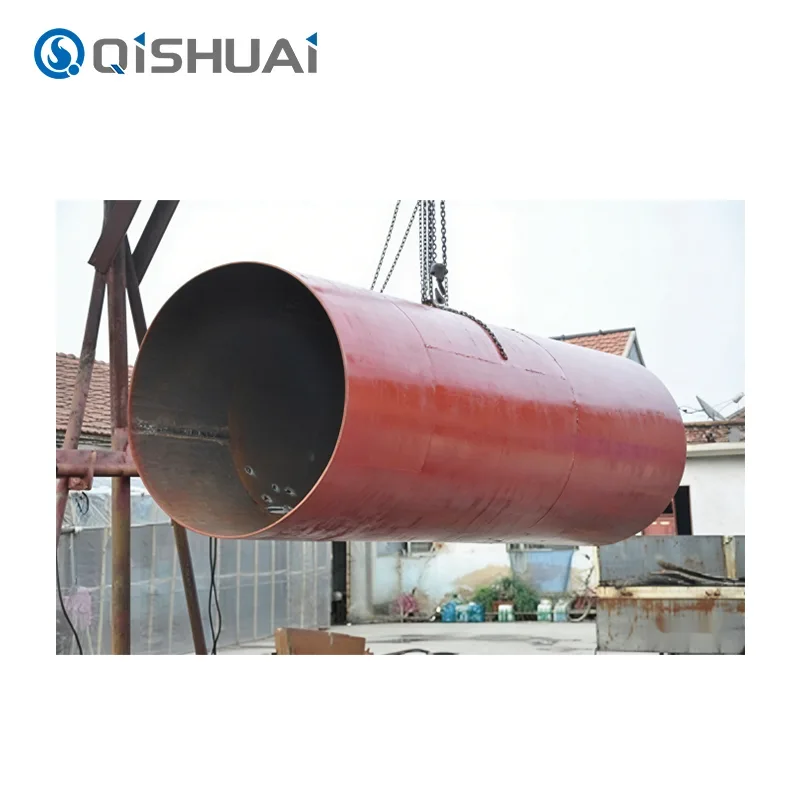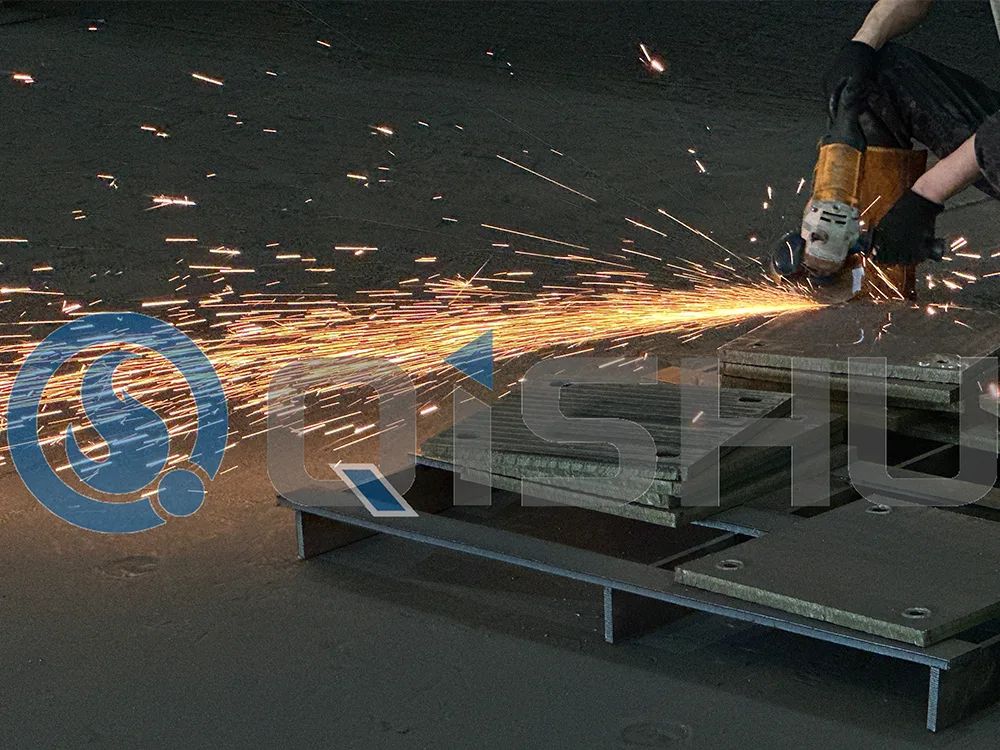
In heavy industries such as mining, cement production, power generation, and port operations, pipeline wear during material conveyance remains a core challenge that constrains production efficiency and elevates operational costs. Under high-abrasion conditions, equipment downtime resulting from pipeline failure accounts for 15%-25% of total production costs. Conventional pipelines require replacement every 3-6 months on average, severely disrupting production continuity. With over a decade of specialisation in wear-resistant technology, Shandong Qishuai Wear-Resistant Equipment Co., Ltd. has developed overlay-welded wear-resistant pipes using CNC fully-automated welding processes. These pipes offer superior abrasion resistance and flexible customisation capabilities, establishing them as the preferred solution for high-wear applications.
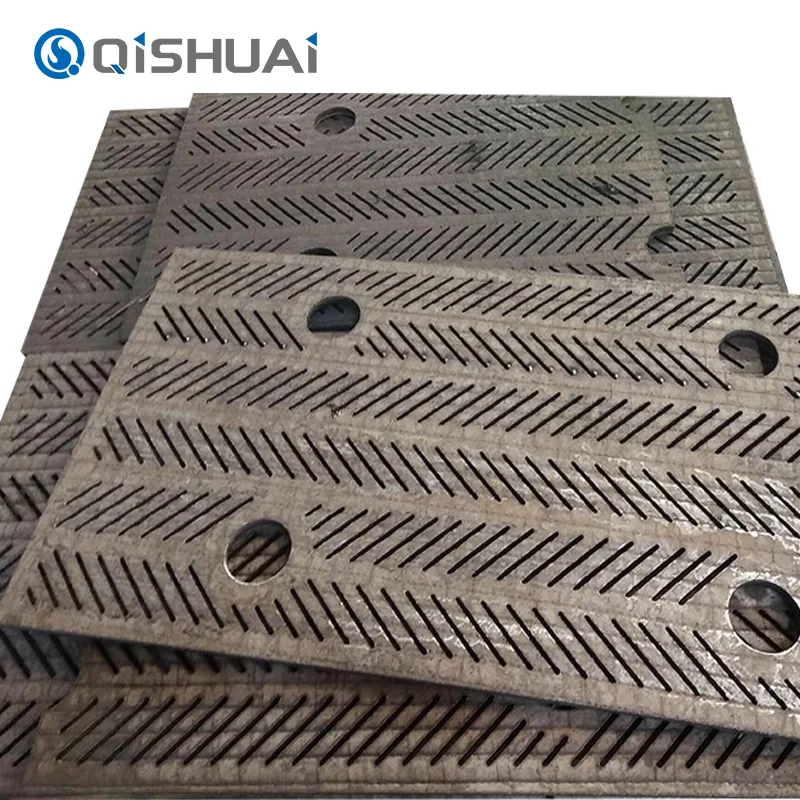
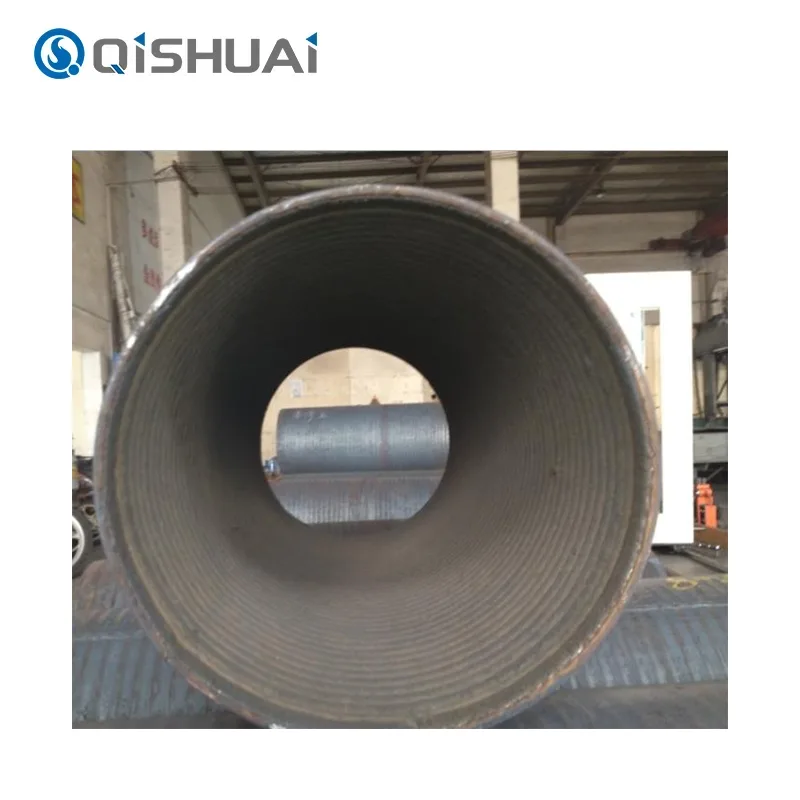
Shandong Qishuai overlay welded wear-resistant pipes employ a composite structure comprising a ‘base material + high-hardness overlay welded layer’. Through fully automated overlay welding processes achieving metallurgical bonding, they combine the impact toughness of the base material with the exceptional wear resistance of the overlay layer. Core specifications and parameters are as follows.
• Pipe diameter range: Internal cladding type ≥80mm; external cladding type with no diameter restrictions. Standard lengths from 0.5m to 12m, with custom lengths available upon request (overcoming the 1.5m length limitation of centrifugal cast pipes and eliminating the risk of joint detachment).
• Overlay thickness: Standard 3–12 mm, customisable from 1–20 mm to accommodate varying wear resistance requirements;
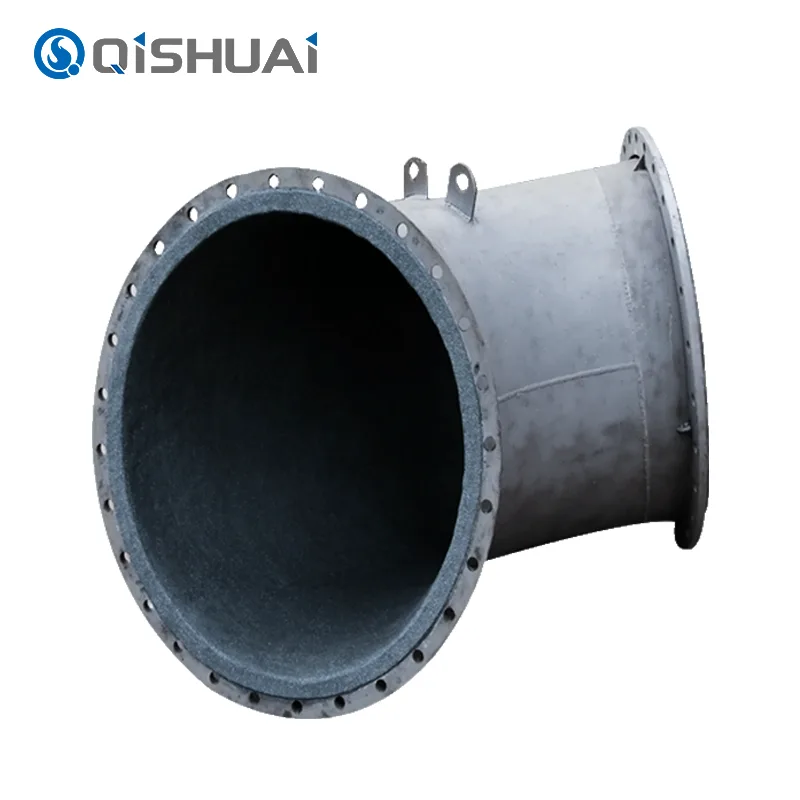
• Bespoke Fabrication: We undertake cutting, bending, rolling, and welding according to client specifications. Capable of producing circular, square, and other custom-shaped ductwork, we also perform drilling, flange welding, and other installation structures to accommodate various non-standard equipment.
| Parameter category | Specific indicators | Performance Advantages Statement |
| Hardness index | Hardness of the clad layer: HRC 55–62 Microhardness of chromium carbide: HV 1800 and above | Its wear resistance is 15 to 20 times that of ordinary carbon steel and 8 times that of high-manganese steel, effectively withstanding the abrasion of high-hardness materials. |
| Bond strength | Metallurgical bond strength up to 350 MPa, with the cladding layer penetrating 1–2 mm into the substrate. | Completely eliminates issues of wear layer detachment and chipping, offering greater stability and reliability than the physical bonding achieved through centrifugal casting. |
| Alloy composition | Based on chromium carbide alloy, special elements such as Mo (molybdenum), Nb (niobium), Ni (nickel), W (tungsten), and V (vanadium) may be added. | The volume fraction of Cr7C3 carbides is ≥50%. The composition may be adjusted according to operating conditions to enhance corrosion resistance and high-temperature performance. |
| Machinability | Suitable for plasma and laser cutting, with excellent weldability and standardised connection methods (flanges, clamps). | On-site installation is straightforward, reducing installation timeframes and accommodating complex installation environments. |
| Service life | Average service life: 18–24 months, extendable to 36 months under certain operating conditions. | Extends 20-30 times longer than ordinary steel pipes and 5-10 times longer than cast wear-resistant pipes, significantly reducing replacement costs. |
The wear patterns and operating conditions vary significantly across different industries. Shandong Qishuai's overlay-welded wear-resistant pipes achieve comprehensive coverage of high-wear scenarios across all sectors through flexible adjustment of overlay thickness and alloy composition. The following outlines core application scenarios and selection recommendations:
| Suitable for the industry | Typical application scenarios | Operating conditions | Recommended Product Specifications | Adaptability Advantage |
| Mining industry | Ore conveying pipelines, slurry pump wear parts, chute conveying pipelines | Impact wear combined with abrasive wear, high material hardness and rapid flow velocity | Overlay thickness: 8–12 mm With added Cr and Mo elements Hardness: HRC 60–62 | Metallurgical bonding offers high strength and impact resistance without detachment, extending service life to 15-18 months and reducing annual downtime by 80%. |
| Cement industry | Cement dust conveying pipelines, ball mill slurry pipelines, clinker conveying pipelines | Abrasive wear predominates, with high dust levels and humidity, making it prone to scaling and blockages. | Overlay thickness: 6–10 mm With added V element Smooth inner wall finish | Exceptional wear resistance, with a smooth inner wall that reduces material resistance and minimises scaling risks, resulting in a 15% increase in production capacity. |
| Electric power industry | Pulverised coal feed pipeline, desulphurisation slurry pipeline, ash and slag conveyance pipeline | High temperatures (≤600°C) + corrosive wear, with the medium containing chemically corrosive components | The overlay weld thickness is 5–8 mm, with the addition of W and Ni elements to enhance high-temperature corrosion resistance. | High-temperature resistance remains stable, corrosion-resistant and leak-proof, reducing maintenance costs by 80%. |
| Port Logistics | Bulk cargo conveying pipelines, wear-resistant pipelines for loading and unloading equipment, seawater medium conveying pipelines | Operating conditions are complex, with a wide variety of materials involved, including seawater corrosion and impact loads. | The overlay weld thickness is 7–10 mm, with the addition of molybdenum and nickel elements to enhance corrosion resistance. | Adaptable to varied operating conditions, resistant to seawater corrosion, featuring convenient connections, and compatible with large-scale port handling equipment. |
| Steel industry | Slurry conveyance pipelines, steel slag conveyance pipelines, high-temperature flue gas pipelines | High-temperature wear + abrasive wear, high medium temperature and high hardness | Overlay thickness: 10–15 mm With added W and V elements Hardness: HRC 60–62 | High-temperature wear resistance, with a service life of up to 24 months, significantly reducing downtime losses. |
【Procurement Pain Point】: Certain legacy or customised equipment features unique pipe dimensions, making commercially available standardised overlay-welded wear-resistant pipes unsuitable. Splicing installations risk leaks, accelerated wear, and increased installation costs.
【Qishuai Solution】: Comprehensive customisation capabilities. Supports bespoke production based on client drawings, enabling flexible adjustments to pipe diameter, length, and overlay thickness. Can directly incorporate flange connections, clamp fittings, and other installation structures, and even fabricate square or non-circular profiles.
【Procurement Pain Point】: The core quality of hardfacing wear-resistant pipes lies in the bond strength between the wear layer and substrate, alongside wear resistance – aspects impossible to judge visually. Some smaller manufacturers employ substandard materials or manual hardfacing techniques, leading to issues such as wear layer detachment and cracking during product use.
【Qishuai Solution】: Comprehensive quality control throughout the production process + authoritative testing reports. Fully automated surfacing equipment is employed during manufacturing to eliminate issues of uneven thickness and poor bonding associated with manual surfacing. Finished products undergo rigorous testing, and sample testing services are provided. Purchasers may test samples under their own operational conditions, confirming performance compliance before proceeding with bulk procurement.
【Procurement Pain Point】: Buyers are concerned that low-cost products may fail to meet quality standards, yet they also wish to control expenditure, making it difficult to find equilibrium between value for money and longevity.
【Qishuai Solution】: High-value products + optimisation of total lifecycle costs. Shandong Qishuai's overlay-welded wear-resistant pipes, while initially more costly than standard piping, boast a service life 20-30 times longer than ordinary steel pipes. When factoring in maintenance expenses and downtime losses, their overall cost-effectiveness surpasses centrifugal cast wear-resistant pipes by 5-8 times. Furthermore, tailored selection options can be provided according to the purchaser's budget, optimising product parameters to precisely match cost and performance while ensuring core wear resistance remains uncompromised.
1. Define core operating parameters: Assess material hardness, flow velocity, temperature, corrosiveness, and equipment dimensions to preliminarily determine requirements;
2. Consult Qishuai's technical team: Provide operational data to obtain wear-resistant solutions, confirming product specifications, overlay thickness, and alloy composition;
3. Verify products and services: Review inspection reports, confirm installation and after-sales support, then execute purchase contracts.
Shandong Qishuai Wear-Resistant Equipment Co., Ltd. consistently prioritises ‘application-specific adaptation’. Through premium products, flexible customisation capabilities, and comprehensive service systems, we have become a trusted partner for mining, cement, power generation, and other industries. Should you encounter challenges in selecting overlay-welded wear-resistant pipes, we invite you to contact Qishuai's technical team for a bespoke selection solution.
Email: qishuai@zbqishuai.com